
Türkiye calls for urgent Customs Union update to protect apparel industry competitiveness
Speaking at the Conference Titled “Transformation Journey of the Turkish Apparel Industry,” IHKIB Chairman Mustafa Paşahan: Customs Union Agreement Must Be Updated Without Delay for Our Competitiveness
Mustafa Paşahan: “The Customs Union, in its current form, has more of a restrictive effect than a supportive one on our cooperation. The free trade agreements the EU has signed with third countries generate asymmetric outcomes for Türkiye. For this reason, a formula must be found to include Türkiye in the EU’s FTA negotiation processes.”
Mustafa Paşahan, Chairman of the Istanbul Apparel Exporters’ Association (IHKIB), stated that the CustomsUnion Agreement signed with the European Union 30 years ago, in its current form, has more of a restrictive effect on cooperation between the parties than a supportive one. Paşahan underlined that a lasting competitive advantage in the EU market can only be achieved through the full modernization of the Customs Union.
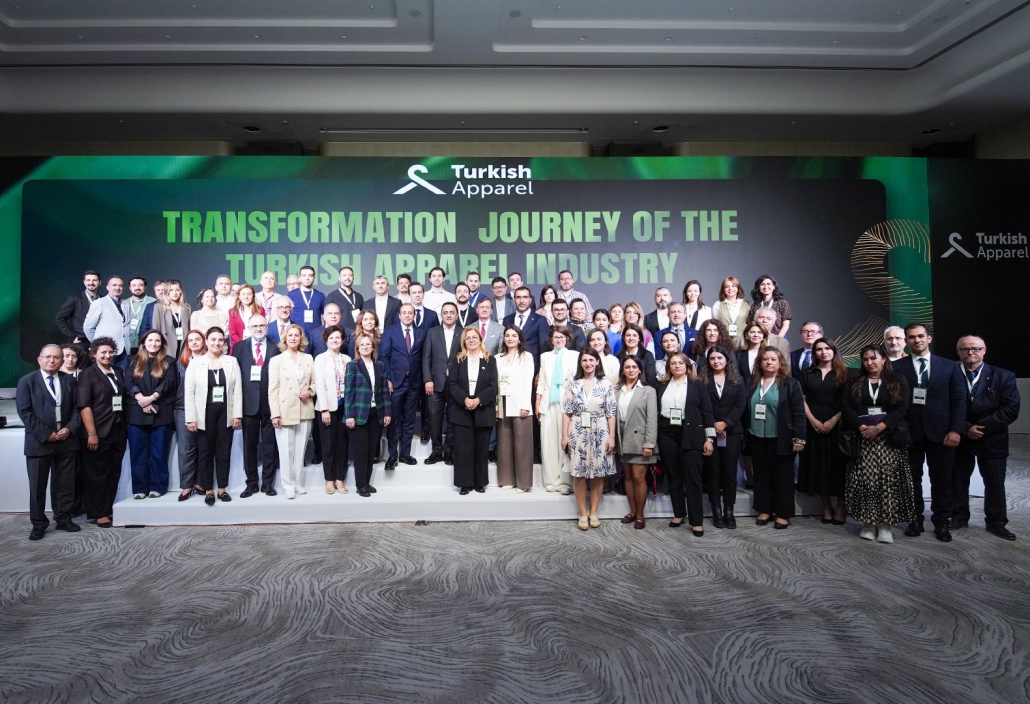
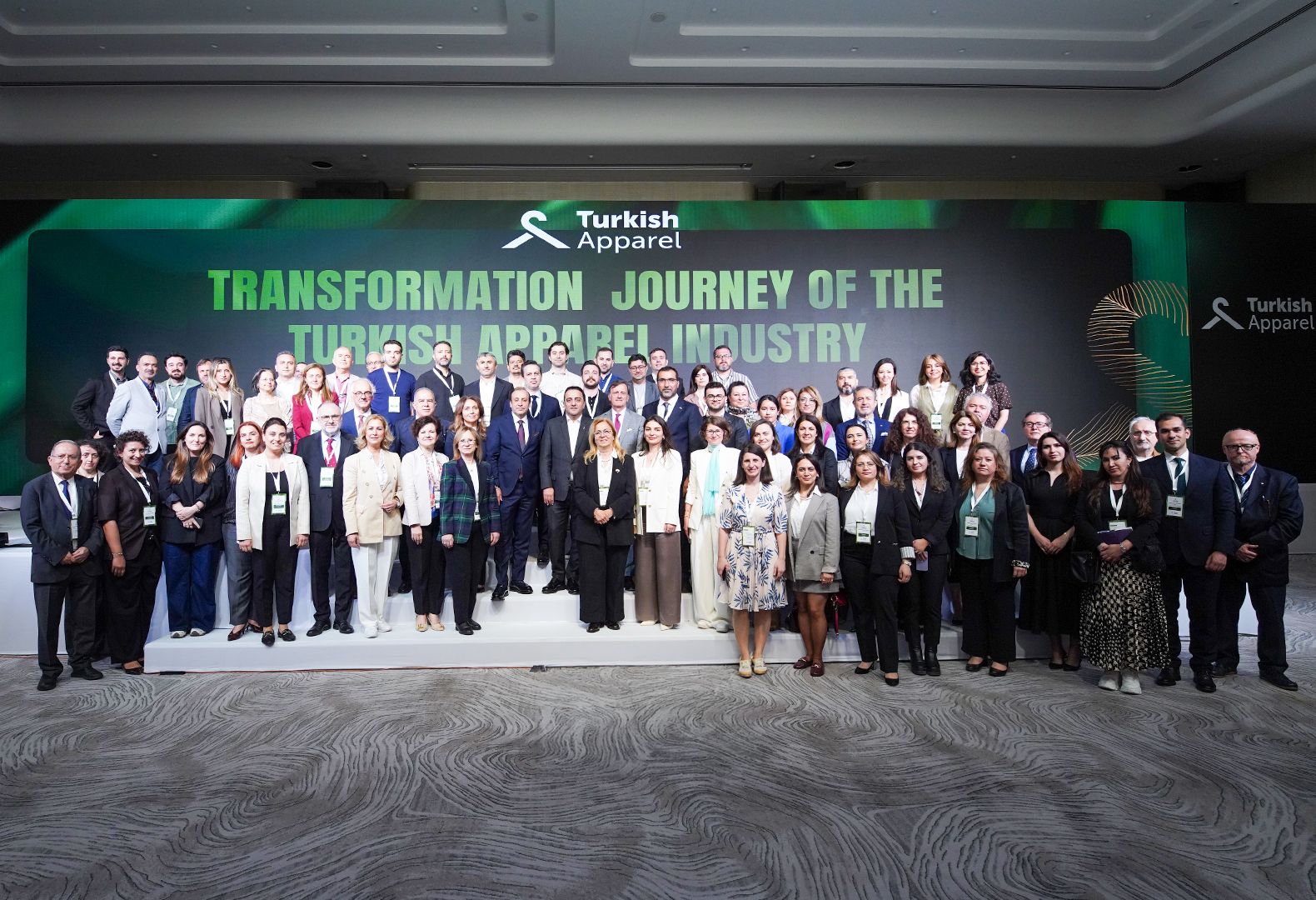
The conference, titled “Transformation Journey of the Turkish Apparel Industry” and organized by IHKIB, brought together the presidents of international industry organizations, brand representatives, sector professionals, exporters, and experts.Delivering the opening remarks, Mustafa Paşahan drew attention to the EU’s position as a strategic market for the Turkish apparel sector. Noting that 61 percent of Türkiye’s total apparel exports are directed to EU member states, Paşahan made the following remarks:
“We know that a lasting competitive advantage in the EU market can only be achieved through the full modernization of the Customs Union. However, the Customs Union in its current form has more of a restrictive effect on our cooperation than a supportive one. The free trade agreements (FTAs) the EU has concluded with third countries generate asymmetric outcomes for Türkiye. For this reason, a formula must be found to include Türkiye in the EU’s ongoing FTA negotiation processes, and the Customs Union must be updated in line with the shifting economic landscape. On another front, the Pan-Euro-Mediterranean Rules of Origin Cumulation has facilitated North African countries’ access to the EU market — a development that diminishes the advantages Turkey derives from the Customs Union and intensifies competitive pressure, particularly in the textile and readyto- wear sectors. It is therefore of great importance that developments pertaining to rules of origin be taken into account during the process of updating the Customs Union. We are also closely monitoring developments related to the ‘Made in Europe’ initiative, and we expect a framework to be established that does not exclude the value chains in which Türkiye is integrated.”
TIM Chairman Gültepe: We Object to the Customs Union Being Turned into Shackles
Turkish Exporters Assembly (TIM) Chairman Mustafa Gültepe, in his address, recalled the FTAs the EU has concluded with MERCOSUR countries and India. Stating that they have no objection to the EU signing FTAs with third countries, Gültepe continued:
“However, we strongly object to these FTAs turning the 30-year-old Customs Union Agreement into shackles for Turkey. We have serious objections to the possibility of products of Indian and South American origin entering our country duty-free indirectly through the EU. We are a country that is formally conducting full membership negotiations with the EU — even if those negotiations are effectively frozen. Accordingly, we have rights as well as obligations. Rather than being a neighbor whose door is only knocked on in difficult times, we want to be a strategic partner with whom the EU develops sustainable cooperation on the basis of mutual benefit.”
Other Speakers at the Event:
Mario Jorge Machado, President of EURATEX (European Apparel and Textile Confederation): EU Regulations Serve Not as a Barrier but as a Strategic Market Filter, Providing a Competitive Edge to Turkish Companies That Align Early.
“The EU regulatory framework should not be a barrier — it is a market access filter. Turkish companies that align early will not just comply; they will compete on terms that others cannot match.”
Stefano Festa Marzotto, President of the International Apparel Federation (IAF): IAF, ITMF, and IHKIB are driving industry transformation by uniting manufacturers, brands, and governments under a shared, manufacturer-centered agenda.
“Industry transformation will not happen through individual actors working in isolation – not through brands alone setting requirements, development partners alone running project-by-project programmes, manufacturers alone investing without support and infrastructure. It requires a new approach – one that places manufacturers at the centre and allows the whole industry to work together in the same direction, with a shared agenda and a shared understanding of what needs to happen, and in what sequence. This conviction underpinned IAF and ITMF’s joint founding of ATTI, the sector’s platform for manufacturer-driven collective action to realise industry transformation. And it underpins IHKIB’s role as a pioneer of the initiative. By supporting manufacturer leadership while leveraging the participation of brands, government representatives and industry experts, IAF, ITMF and IHKIB are creating the conditions for coordination demanded by industry transformation.”
Lindita Xhaferi-Salihu, Business Engagement Lead at UN Climate Change (UNFCCC): Heading towards COP31, the Turkish apparel industry is leveraging its strategic role in the European ecosystem to accelerate climate action through strengthened public-private partnerships.
“We are now in a decisive phase of implementation. As we look ahead to COP31 in Antalya, Türkiye, the Global Climate Action Agenda underscores what the real economy is already demonstrating: solutions exist, and proven approaches are being deployed. The central challenge for the fashion industry is no longer to define what needs to be done, but to accelerate the pace and scale of implementation. This requires strengthened collaboration between public and private actors across value chains to enable the conditions for delivery—through predictable policy frameworks, accessible finance, clear demand signals, and partnerships that translate ambition into action.”
“Today, the Turkish apparel industry is a strong and well-established part of the European production ecosystem, and Türkiye has become the European Union’s largest apparel supplier in its closest geography. Thanks to the Customs Union, our industry is deeply integrated into European value chains and has evolved into a reliable, competitive and strategic production hub for Europe.
Hüsnü Dilemre, Director General for International Agreements and European Union at the Ministry of Trade of the Republic of Türkiye: Türkiye aims to turn the green transition into a strategic opportunity by aligning with EU standards to reinforce its position as Europe’s most sustainable, resilient, and competitive manufacturing hub.
We see the green transition not as a challenge, but as a major opportunity to further strengthen this position. Sustainability, circularity and traceability are becoming central elements of global trade, and our industry has already gained significant experience in adapting to these new expectations and producing in line with EU standards. In the coming period, by continuing our alignment with evolving EU legislation under the Customs Union, we aim to accelerate the green transformation of existing supply chains together with the EU and further reinforce Türkiye’s role as a sustainable, resilient and competitive manufacturing base.”


